Bambu Lab X1-Carbon + AMS (Combo) 3D Printer - X1CC, Bivolt Review (2026)
Updated September 20, 2026 · Research-based review
Our verdict
Bambu Lab's flagship enclosed printer bundled with AMS for multi-color printing, in a bivolt version for either mains voltage. The strength is combining an enclosed chamber and a 300C hotend with automatic color switching. The trade-off is it costs more than the open-frame A1 combo for a similar build volume.
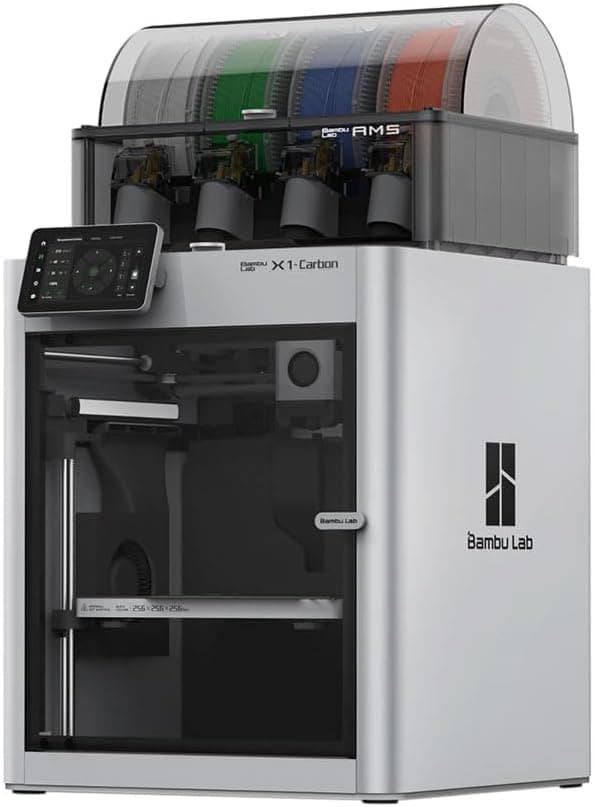
Bambu Lab X1-Carbon with AMS in a bivolt combo, a flagship multi-color printer for engineering and display work.
Price range: See on Amazon
What we liked
- + X1-Carbon plus AMS combines premium hardware with multi-color output
- + Enclosed AMS keeps several spools protected while printing
- + Bivolt version suits regions with different mains voltages
Trade-offs
- - Most expensive route to multi-color printing in this group
- - Advanced features go unused by casual PLA hobby printing
What the Combo Includes
This listing bundles the X1-Carbon printer with Bambu's AMS unit, which stores and feeds up to four spools and switches between them automatically during a print based on the model's assigned colors or materials. The AMS keeps loaded filament inside an airtight, desiccant-equipped enclosure, which helps protect moisture-sensitive filaments like nylon or PETG between prints rather than leaving them exposed to room humidity for days at a time. The bivolt designation on this listing means the unit is built to run on either roughly 115V or roughly 230V mains power, making it usable across regions with different standard wall voltages without needing a separate regional model.
Build Volume and Hotend
The X1-Carbon offers a 256 by 256 by 256mm build volume, the same footprint as the A1 series but paired with a fully enclosed chamber rather than an open frame. It uses a 0.4mm hardened steel nozzle in an all-metal hotend rated up to 300 degrees Celsius, a higher ceiling than many consumer printers, which opens the door to more demanding engineering filaments that need higher nozzle temperatures than standard PLA or PETG typically require. Like the A1, it uses 1.75mm filament and is rated for a maximum tool head speed of 500mm per second with 20 meters per second squared acceleration.
Enclosure and Chamber
The X1-Carbon's enclosure uses glass panels around the frame with an auxiliary part-cooling fan, and the chamber is passively warmed by heat from the bed rather than by a dedicated active chamber heater. That still gives a real advantage over a fully open printer for filaments sensitive to drafts or ambient temperature swings, such as ABS or certain engineering materials, though it is not the same as an actively heated chamber found on some industrial-grade machines. For most hobbyist and small business use cases printing ABS, PETG, PLA or similar materials, the passively warmed enclosure is enough to meaningfully reduce warping and layer separation.
Multi-Color Printing with AMS
The full AMS system works the same way as the AMS lite bundled with the A1, purging a small amount of filament at each color change during a print, which adds time and material use compared to single-color printing of the same model. Where it differs is the airtight, desiccant-equipped storage, which matters more for X1-Carbon owners since the printer's higher nozzle temperature ceiling and enclosed chamber tend to attract users printing a wider range of engineering filaments that are more moisture sensitive than basic PLA, making that extra filament protection more relevant to this machine's typical use case.
Who Should Buy It
This combo suits buyers who want Bambu Lab's most capable consumer printer platform, particularly anyone printing engineering filaments that benefit from a hotter nozzle and an enclosed chamber, alongside automatic multi-color output. It is a meaningfully bigger investment than the open-frame A1 combo for essentially the same build volume, so hobbyists focused purely on casual PLA printing may not fully need the extra chamber and temperature headroom this model provides for their typical projects. For small businesses or enthusiasts producing functional parts, prototypes or display pieces in more demanding materials, the combination of enclosure, hotend ceiling and AMS makes a stronger case for the added cost overall.
Frequently asked questions
What does 'bivolt' mean on this listing?
Bivolt means the unit is built to run on either roughly 115V or roughly 230V mains power, so it works across regions with different standard wall voltages.
Is the X1-Carbon's chamber actively heated?
No, the glass-panel enclosure is passively warmed by heat from the bed rather than by a dedicated chamber heater, though it still reduces drafts and temperature swings.
How does this compare to the A1 Combo for multi-color printing?
Both use an automatic material system for color switching, but the X1-Carbon adds a fully enclosed chamber and a higher 300C hotend ceiling, at a higher price than the open-frame A1.
What build volume does the X1-Carbon offer?
It has a 256 by 256 by 256mm build volume, the same footprint as the Bambu A1, but inside a fully enclosed frame.
Prices change often, so check the current price and availability on Amazon.
Check price on AmazonFilament Print Lab may earn a commission from the link above.