SUNLU TPU 3D Printer Filament 1.75mm, High Speed 95A, 1KG Flexible, Grey Review (2026)
Updated September 14, 2026 · Research-based review
Our verdict
SUNLU's high speed 95A TPU is a 1KG grey flexible filament built to run faster than standard TPU on printers tuned for flexibles. It is a good pick for bumpers, feet and protective covers, but like all TPU it needs a dry box and slower travel moves to avoid stringing.
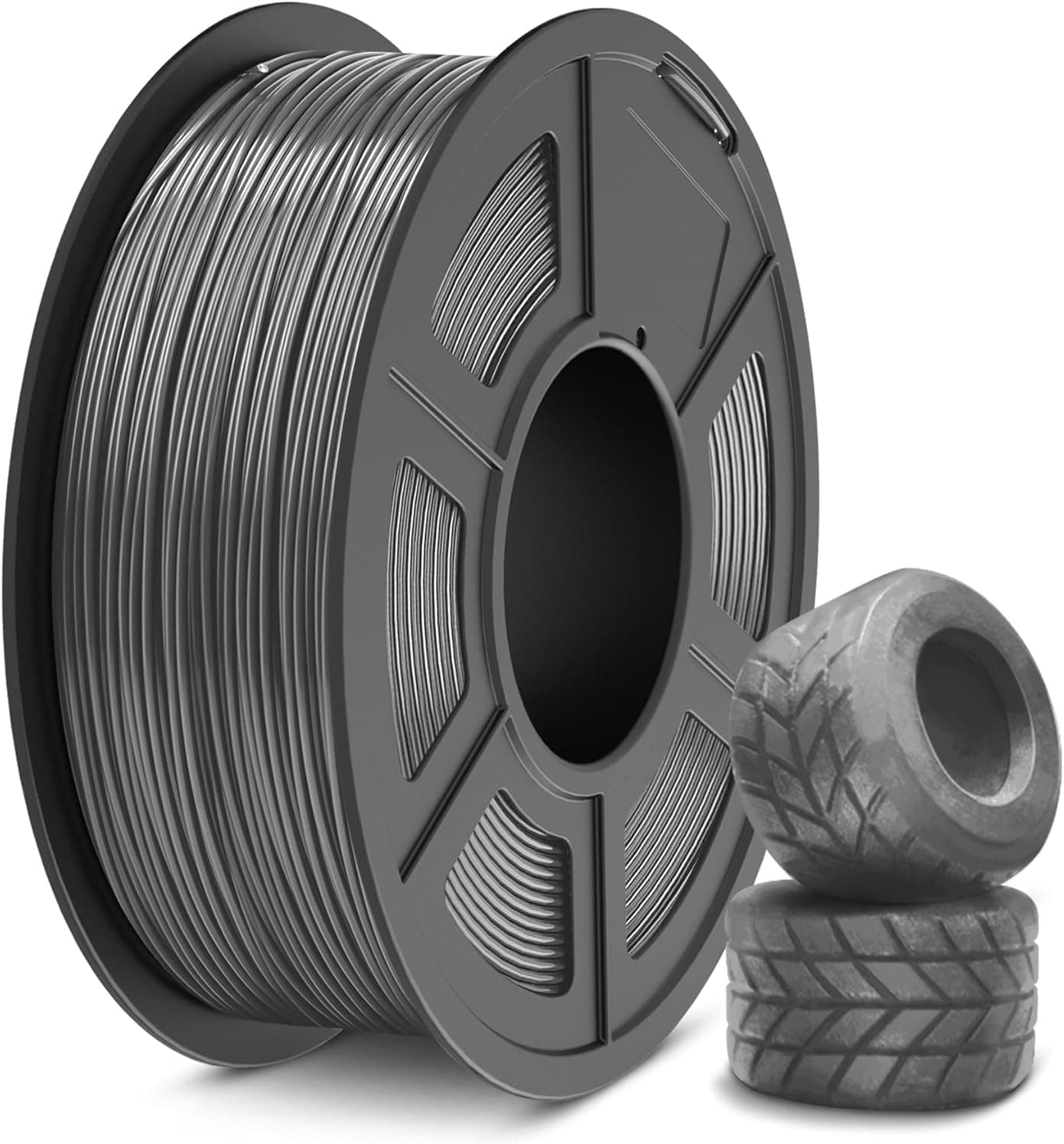
SUNLU high speed 95A TPU in grey, a 1KG flexible 1.75mm filament for bumpers, feet and protective covers.
Price range: See on Amazon
What we liked
- + Grey TPU looks neutral on device bumpers and furniture feet
- + High speed 95A blend lets modern printers run flexibles quicker
- + 1KG spool is plenty for many small flexible parts
Trade-offs
- - TPU absorbs moisture, which causes bubbling if not dried first
- - Stringing is common with flexibles and needs slower travel tuning
Who should buy this filament
This spool suits makers who already print functional flexible parts, such as phone cases, cable protectors, furniture feet or gaskets, and who want a neutral grey that blends into hardware rather than standing out. The high speed formulation is aimed at owners of newer, faster printers with direct drive extruders, since TPU generally needs a short filament path and firm grip to print reliably, and the high speed blend is designed to keep up with printers running quicker than the 40 to 60mm/s that older TPU recipes were limited to. Beginners attempting their first flexible print should still expect a learning curve around retraction and speed tuning, since TPU behaves very differently from rigid filaments like PLA regardless of the brand.
Material specs in plain English
This is a 95A shore hardness TPU, which sits on the firmer end of the flexible filament range, meaning it holds its shape better than very soft 85A or 90A TPUs while still bending and compressing under load. SUNLU lists a 1.75mm diameter with plus or minus 0.03mm accuracy and roughly 330 meters of filament per 1kg spool, packaged in a vacuum sealed bag to limit moisture pickup before first use. The recommended print settings are a 210 to 230C nozzle and 50 to 60C bed, with speeds around 80 to 120mm/s on printers that can handle the faster formulation; owners on older Bowden setups will usually need to print well below that range regardless of what the spool suggests.
Living with TPU day to day
TPU filament absorbs atmospheric moisture readily, and wet TPU tends to bubble, hiss and print rough textured surfaces instead of clean layers, so storing the spool in a dry box or airtight container with desiccant between sessions is worth the extra step. Because TPU flexes rather than pushing rigidly through the extruder, retraction settings usually need to be reduced compared to PLA, and travel speed slowed down, otherwise stringing and oozing between parts becomes common. Direct drive extruders generally handle TPU far more predictably than Bowden setups, since the shorter path gives the material less room to buckle inside the tube before reaching the hot end.
Trade-offs versus other TPU spools
Compared with SUNLU's own black 95A high speed TPU, which carries a slightly higher score in independent testing roundups, the grey color reviewed here is functionally the same formulation, so the choice mostly comes down to which color fits the intended part. Against OVERTURE's high speed 95A TPU, another commonly recommended option at the same hardness, SUNLU's spool is priced and sized similarly for a 1kg roll, with both brands marketed as engineered to run faster than generic TPU. Buyers wanting a firmer, more dimensionally stable flexible filament for structural parts might instead look at Polymaker's TPU95 line, which is UV resistant and sold in a smaller 0.75kg spool aimed at more demanding applications.
Verdict and who should pick something else
For anyone printing grey flexible parts on a printer already set up for TPU, this spool is a straightforward, reasonably priced choice that should perform close to SUNLU's better rated black version once dialed in. Printers without a direct drive extruder, or owners hoping to print TPU with zero tuning effort, are likely to be frustrated regardless of brand, since flexible filament always demands slower speeds and reduced retraction compared with PLA or PETG. Anyone needing a softer, more rubbery feel should look at a lower shore hardness like 85A, since 95A prints firmer than many people expect from the word flexible.
Frequently asked questions
What nozzle and bed temperature does this TPU need?
SUNLU recommends a 210 to 230C nozzle with a 50 to 60C bed, and print speeds around 80 to 120mm/s on printers built to handle the high speed formulation; slower printers should reduce speed well below that range.
Will this TPU work on a Bowden style printer?
It can, but TPU generally prints far more reliably on direct drive extruders because the shorter filament path resists buckling; Bowden owners typically need much slower speeds and careful retraction tuning to get consistent results.
How should I store this filament between prints?
Keep it in an airtight container or dry box with desiccant, since TPU absorbs moisture readily and printing a wet spool commonly causes bubbling and a rough, inconsistent surface finish.
Prices change often, so check the current price and availability on Amazon.
Check price on AmazonFilament Print Lab may earn a commission from the link above.