SUNLU TPU Filament 1.75mm, 1kg Black, 95A High Speed Flexible, +/- 0.03mm Review (2026)
Updated September 14, 2026 · Research-based review
Our verdict
A high speed 95A TPU that suits owners with a direct drive extruder who want flexible parts without the usual crawling print speeds. The tight +/- 0.03mm tolerance helps it feed reliably, and 95A hardness balances flexibility with enough firmness for cases and gaskets, but Bowden printers and heavy post-processing are still the wrong fit.
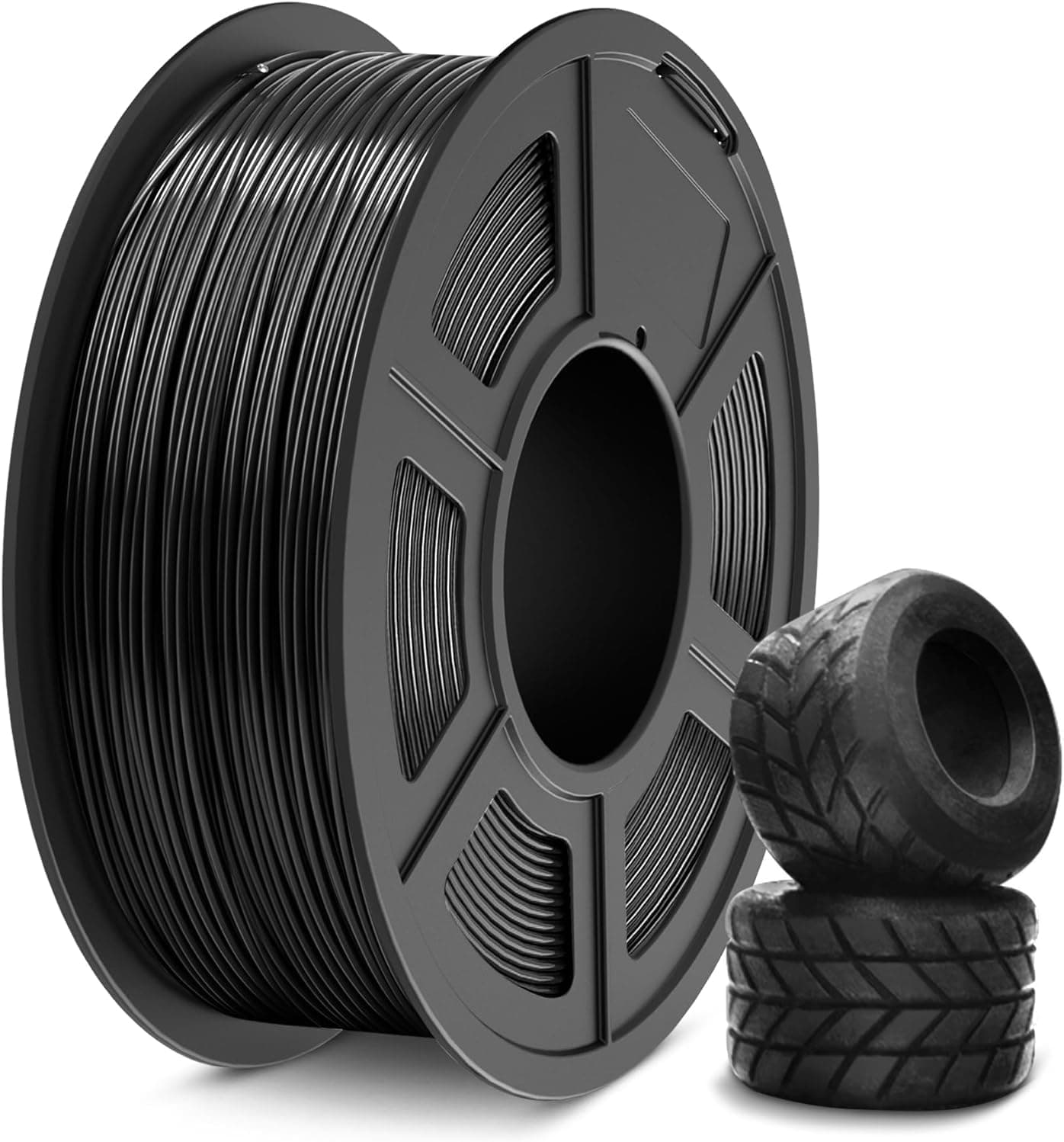
SUNLU TPU in black, a 95A high speed flexible 1.75mm filament on a 1kg spool with +/- 0.03mm tolerance.
Price range: See on Amazon
What we liked
- + 95A hardness is flexible yet firm enough for phone cases and gaskets
- + High speed TPU formulation prints faster than traditional flexibles
- + +/- 0.03mm tolerance helps flexible filament feed without jams
Trade-offs
- - Bowden extruders struggle with TPU, so direct drive is best
- - Flexible prints are hard to sand or post-process cleanly
Who this filament is suited to
This SUNLU TPU is built for people who already print PLA or PETG comfortably and want to add flexible parts such as phone cases, cable management clips, gaskets or grippy feet without switching to a specialist flexible-only printer. The 95A Shore hardness sits toward the firmer end of the TPU range, so it holds its shape better than soft 85A to 90A TPUs while still bending and compressing where needed. It is described as a high speed formulation, which matters most to owners with a direct drive extruder, since the short filament path lets the higher speed actually translate into faster prints rather than skipped steps or under-extrusion. Anyone on a Bowden setup or printing very soft, stretchy parts should look elsewhere.
What the spec sheet tells you
The filament is rated at 95A hardness and printed at a nozzle temperature in the low 200s Celsius, with a bed temperature in the 50 to 60C range and comparatively slow print speeds of roughly 80 to 120mm/s for the high speed variant, still far faster than a standard TPU is usually pushed. SUNLU lists a dimensional accuracy of +/- 0.03mm, which is tight for a flexible filament and helps reduce the diameter swings that cause TPU to jam mid-print. It ships on a 1kg spool in black, sealed in vacuum packaging to keep the hygroscopic TPU dry from the factory, since TPU absorbs moisture readily and prints worse when wet.
Printing and handling it day to day
A direct drive extruder with a short, well constrained filament path gets the most out of this filament, since TPU tends to buckle in the gap between the extruder gears and the hotend on long Bowden tubes. Slowing down retraction distance and speed, or disabling retraction almost entirely, avoids the jams that flexible filament is known for. Keeping it dry matters more than with rigid filaments: if prints start showing stringing, bubbling or a rough surface, a few hours in a filament dryer at a mild temperature typically restores print quality. Because the material is soft, supports and rafts peel differently than they do with PLA, and sanding or gluing the surface afterward is harder than with rigid plastics.
How it stacks up against other TPU options
Against OVERTURE's high speed 95A TPU, which the site scores the same overall, the two are close on hardness and dimensional accuracy, so the choice often comes down to spool winding quality and price rather than a clear performance gap. Polymaker's PolyFlex TPU95 ranks slightly ahead on the site's specs and materials score and adds claimed UV resistance for outdoor parts, but comes on a smaller 0.75kg spool at a higher price per gram. A grey version of this same SUNLU TPU and a multi-roll SUNLU bundle sit lower in the ranking, useful mainly for buyers who want more colors rather than the single-spool value of this black roll.
Verdict on this TPU filament
This is a solid pick for a direct drive printer owner who wants flexible parts at a pace faster than traditional TPU without stepping up to a premium filament brand. The tight tolerance and vacuum sealing reduce two of the most common causes of TPU jams, which makes it a reasonable first flexible filament for someone used to rigid materials. Skip it on a Bowden printer unless retraction and speed are heavily tuned down, and consider Polymaker's PolyFlex instead if the parts will live outdoors and UV stability matters more than saving a few dollars per spool.
Frequently asked questions
Can this TPU be used on a Bowden extruder?
It can, but flexible filament is much harder to feed reliably through a long Bowden tube. A direct drive extruder gives more consistent results, and Bowden users typically need slower speeds and reduced retraction.
What print settings work best for 95A TPU?
A nozzle temperature in the low 200s Celsius, a bed around 50 to 60C, and moderate print speeds are the usual starting point, with retraction distance and speed lowered compared to rigid filaments.
Does this filament need to be dried before use?
TPU absorbs moisture readily, and while it ships vacuum sealed, prints that show stringing or a rough surface after storage often improve after a session in a filament dryer.
How does 95A hardness compare with softer TPU grades?
95A is firmer than typical 85A to 90A TPU, so it holds detail and shape better for cases and mechanical parts, while softer grades flex more and suit gaskets or grips that need extra give.
Prices change often, so check the current price and availability on Amazon.
Check price on AmazonFilament Print Lab may earn a commission from the link above.