BIGTREETECH SFS V2.0 Smart Filament Runout Sensor, Bi-Directional Photoelectric, 1.75mm Review (2026)
Updated September 21, 2026 · Research-based review
Our verdict
A smart pick for anyone who has lost prints to silent runouts or clogs rather than obvious empty spools. The main strength is bi-directional photoelectric detection that catches jams and entanglement, not just an empty spool; the main trade-off is the setup work of wiring it into a free board port and configuring firmware.
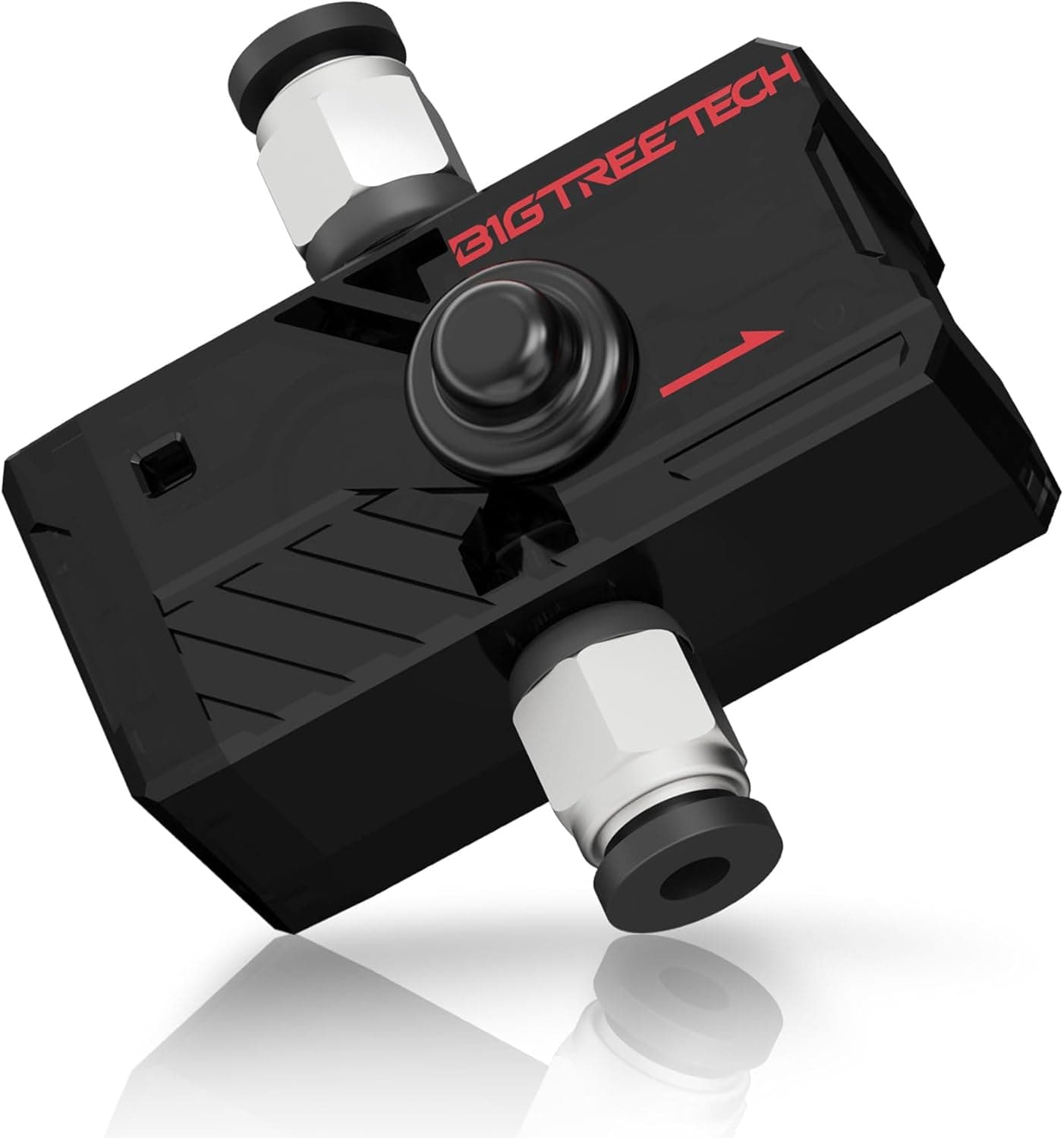
BIGTREETECH SFS V2.0 smart filament runout sensor with bi-directional photoelectric detection for 1.75mm filament.
Price range: See on Amazon
What we liked
- + Detects both runout and filament jams by tracking movement
- + Bi-directional design works with retractions without false alarms
- + V2.0 revision improves on the original SFS module
Trade-offs
- - Needs firmware configuration and a free sensor port on the board
- - Adds a small amount of friction to the filament path
What the SFS V2.0 actually detects
BIGTREETECH's SFS V2.0 is a motion-based filament sensor rather than a simple mechanical switch. According to the manufacturer's own listings and third party retailers like Biqu Equipment, it uses a photoelectric sensor paired with motion detection to watch filament movement in real time, which lets it catch more than a plain runout. It can flag a snapped filament, a clogged nozzle, tangled spool, or an extruder skipping steps, because all of those show up as abnormal or stopped motion rather than an empty spool path. Biqu's listing states the sensor triggers a pause within about 3mm of a detected issue, which is meaningfully tighter than the original V1.0 module. For anyone who has come back to a failed print hours later only to find a tangle or clog rather than a truly empty spool, that broader detection window is the real upgrade over a basic runout switch.
Bi-directional design and filament compatibility
Unlike sensors that only work with filament feeding in one direction, the SFS V2.0 is bi-directional, so it does not care which way filament passes through it during installation or during retractions. That matters on printers with aggressive retraction settings, where a direction-sensitive sensor can misread normal retract and prime motion as a runout and pause prints unnecessarily. Retailer listings describe a pushable filament feeding lever built into the housing, which is meant to make loading easier, including with flexible materials like TPU that can be harder to thread through a rigid sensor path. The sensor is rated for 1.75mm filament generally, not tied to one brand or material, so it should sit in the path regardless of whether the spool loaded is PLA, PETG, or a flexible filament.
Firmware and mounting
The SFS V2.0 is built to work with the major open firmware options, listed by BIGTREETECH and resellers as Marlin, Klipper, and RRF, so it fits most modified Ender, Voron, and similar DIY-adjacent printers rather than being locked to one ecosystem. That flexibility is a plus for tinkerers but means the sensor is not a true plug and play part on every machine. Installing it correctly requires a free filament sensor port on the control board and firmware configuration to recognize the new bi-directional signal logic, which is more setup than swapping in a basic mechanical switch. The housing includes three mounting holes on the back so it can be paired with a printed or purchased bracket, letting builders place it wherever the filament path allows rather than being stuck with a single mounting position.
Where it fits versus the base SFS V2.0 board-specific kit
This particular listing is a general 1.75mm bi-directional version, while a related BIGTREETECH listing bundles the same V2.0 sensor with explicit SKR Mini E3 and Octopus board compatibility notes and Klipper, Marlin, and RRF support spelled out for those boards specifically. Buyers running one of those exact boards may prefer that variant for the added confidence, while this listing suits anyone building a custom wiring setup or running a different controller that already exposes a compatible filament sensor header. Either way the core sensing hardware and bi-directional behavior are the same generation of module, so the choice mostly comes down to which listing better documents the exact board in a given printer.
Who should buy it
This sensor fits users who have already dealt with a false-alarm-prone single-direction sensor or who want broader protection than a basic runout switch offers, especially anyone running long unattended prints where a silent jam or tangle can waste hours of filament and time. It is a poor fit for someone who just wants a five-minute drop-in accessory with zero configuration, since realizing the bi-directional detection benefits means wiring it to a free port and setting up firmware support correctly. Owners of Klipper, Marlin, or RRF-based printers with some comfort editing configuration files get the most value, while beginners on fully closed stock firmware may struggle to add it at all.
Frequently asked questions
Does the SFS V2.0 only detect a fully empty spool?
No. Retailer listings describe it as detecting filament breakage, clogs, tangles, and extruder faults through motion tracking, not just a runout at the end of a spool.
Which firmware does it support?
Manufacturer and reseller listings state support for Marlin, Klipper, and RRF firmware.
Does the filament feed direction matter during installation?
No, the sensor is bi-directional, so it works regardless of which way filament passes through it, including during retractions.
What do I need before installing it?
A free filament sensor port on your control board and firmware configuration to recognize the sensor's signal, according to reseller documentation.
Prices change often, so check the current price and availability on Amazon.
Check price on AmazonFilament Print Lab may earn a commission from the link above.