eSUN ePA-CF Carbon Fiber Filled Nylon Filament 1.75mm 0.5KG Black Review (2026)
Updated September 21, 2026 · Research-based review
Our verdict
A strong option for engineering parts that need real heat and mechanical resistance, but only for printers set up to handle it. The strength is a carbon fiber reinforced nylon blend built for stiffness and heat resistance; the trade-off is that moisture sensitivity and high temperatures demand careful drying and a hardened nozzle.
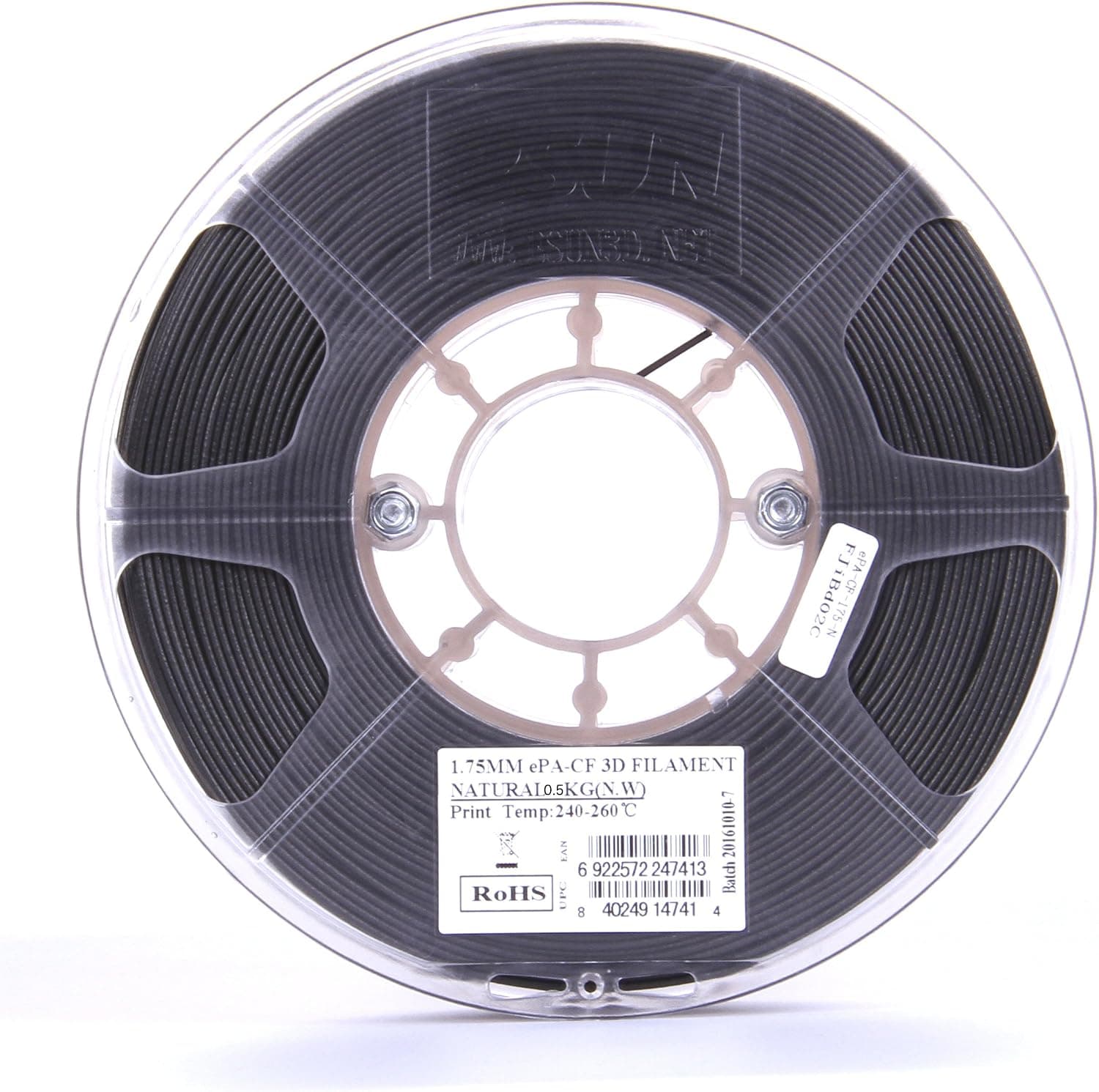
eSUN ePA-CF carbon fiber filled nylon in black, a 1.75mm 0.5KG spool for strong, heat-tolerant engineering parts.
Price range: See on Amazon
What we liked
- + Carbon fiber nylon offers high strength and heat resistance
- + Great for gears, brackets and parts under mechanical load
- + eSUN ePA-CF is a proven entry into engineering nylon composites
Trade-offs
- - Nylon absorbs moisture fast, so drying before printing is essential
- - Needs high temperatures and ideally an enclosed printer
Material composition and what carbon fiber nylon is for
eSUN's own product pages and reseller listings describe ePA-CF as roughly 80 percent nylon combined with 20 percent carbon fiber reinforcement, a blend built for higher rigidity, strength, and wear resistance than plain nylon or standard PLA-based filaments. Carbon fiber fill generally increases stiffness and reduces the tendency to sag or creep under sustained load, which is why eSUN and resellers position ePA-CF for structural or functional parts rather than decorative prints. This is squarely an engineering filament category, aimed at gears, brackets, jigs, and other parts expected to bear real mechanical stress rather than sit on a shelf.
Print and bed temperature requirements
eSUN's listings state a recommended nozzle temperature between 260 and 290 degrees Celsius and a bed temperature between 45 and 60 degrees Celsius for ePA-CF, a considerably hotter range than PLA or even standard PETG requires. Reaching the top of that nozzle range means an all-metal hotend is effectively required, since many stock hotends with PTFE-lined throats cannot safely sustain temperatures that high without degrading. Printers without a heated enclosure can still work with this filament, but consistent results at these temperatures generally benefit from reduced drafts around the print and stable ambient conditions, which an enclosure helps provide.
Moisture sensitivity and drying
Nylon-based filaments are well known for absorbing atmospheric moisture quickly, and eSUN's own guidance calls for a full 24-hour drying cycle before the filament is packaged, shipping it vacuum sealed with desiccant to preserve that dryness until first use. Once a spool is opened, buyers should expect to redry it periodically if it is exposed to humid air for any length of time, since printing with damp nylon-carbon filament commonly causes popping sounds, brittle layers, and rough surface finish. This is meaningfully more maintenance than PLA or ABS require, and anyone unwilling to use a filament dryer or dry box regularly should weigh that before choosing this material.
Nozzle wear and heat resistance
Because carbon fiber particles are abrasive, eSUN recommends printing ePA-CF through a 0.6mm or larger stainless steel nozzle rather than a standard brass nozzle, since the fiber content will wear down softer nozzle materials over time. eSUN also lists a heat resistance figure of about 120 degrees Celsius along with a UL94-V2 flame retardance rating, properties that matter for parts expected to sit near heat sources or under-hood applications where standard PLA or PETG parts would soften or deform. Diameter tolerance is listed at plus or minus 0.05mm, a wider spec than premium PLA filaments but typical for reinforced engineering filaments in this category, so buyers should expect slightly more flow variation than a tight-tolerance PLA spool.
Who should buy this filament
This spool suits makers who already have a printer capable of handling abrasive, high-temperature filaments, meaning an all-metal hotend with a hardened or stainless steel nozzle at minimum, and who are printing parts that genuinely need extra stiffness and heat tolerance, such as mounts, brackets, or tooling. It is a poor fit for beginners without upgraded hardware, since the required print temperatures and nozzle wear resistance rule out stock brass-nozzle setups, and for anyone unwilling to manage nylon's moisture sensitivity with a dryer or dry storage. The half kilogram spool size also suits testing or smaller parts more than large batch production.
Frequently asked questions
What nozzle does this filament need?
eSUN recommends a 0.6mm or larger stainless steel nozzle because the carbon fiber content is abrasive and wears down standard brass nozzles.
What print temperature range does eSUN recommend?
eSUN lists a nozzle range of 260 to 290 degrees Celsius and a bed range of 45 to 60 degrees Celsius.
Does this filament need to be dried before use?
Yes, nylon-based filaments absorb moisture quickly; eSUN dries it 24 hours before vacuum sealing, and users should redry it if it sits exposed to humid air.
What is the material made of?
eSUN describes ePA-CF as roughly 80 percent nylon combined with 20 percent carbon fiber reinforcement.
Prices change often, so check the current price and availability on Amazon.
Check price on AmazonFilament Print Lab may earn a commission from the link above.