QIDI Max4 3D Printer, 390x390x340mm, Heated Chamber, 800mm/s, CoreXY & Auto Bed Leveling Review (2026)
Updated September 14, 2026 · Research-based review
Our verdict
The QIDI Max4 combines a large 390x390x340mm heated-chamber build volume with genuinely fast CoreXY motion, making it suited to engineering filaments and bigger functional parts. It demands real floor or bench space and a bigger budget than mid-size CoreXY printers, so it is not a casual first machine.
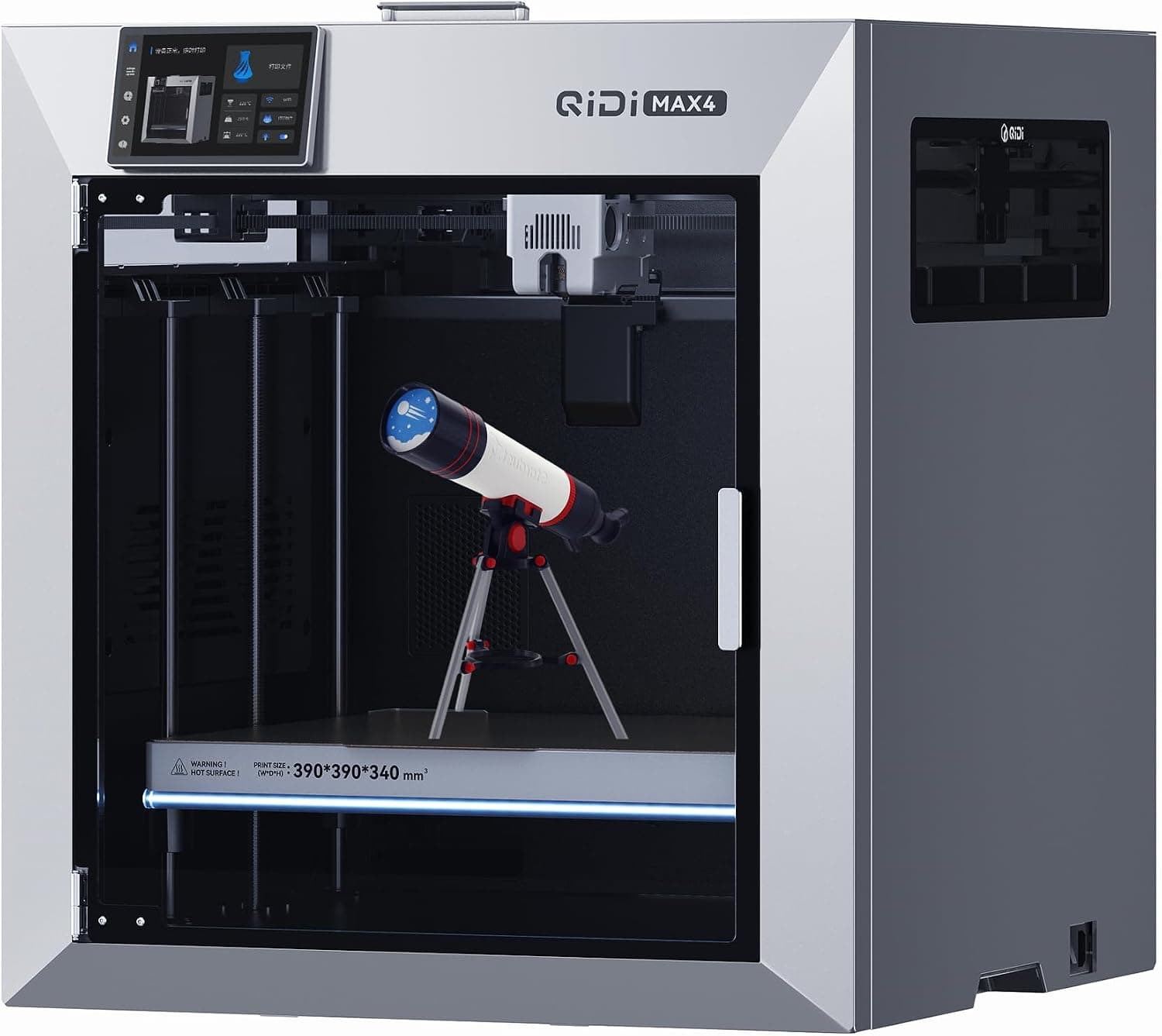
QIDI Max4, a large CoreXY printer with a 390x390x340mm build, heated chamber, auto bed leveling and 800mm/s speed.
Price range: See on Amazon
What we liked
- + 390x390x340mm build is huge for an enclosed, heated CoreXY printer
- + Heated chamber keeps big engineering parts from cracking or lifting
- + 800mm/s rated speed is the fastest figure in this CoreXY list
Trade-offs
- - Large heated enclosure needs serious floor or bench space
- - Premium hardware costs more than mid-size CoreXY machines
Who the Max4 is built for
The QIDI Max4 targets makers and small workshops who need both a large build volume and the ability to print engineering-grade materials like nylon, carbon-fiber composites, ASA and polycarbonate. Its 390x390x340mm chamber is unusually large for an enclosed, actively heated CoreXY printer, giving room for bigger functional parts, enclosures or batch jobs that would not fit on a standard 220x220mm bed. This is not a printer for someone who just wants a small first machine for keychains and school projects; the size, price and heated chamber are aimed at users who already know they need the extra volume and material range. A workshop, print farm operator or serious hobbyist printing structural or high-temperature parts is the clearer fit.
CoreXY motion, heated chamber and materials explained
QIDI rates the Max4's toolhead at up to 800mm/s with a maximum acceleration of 30,000mm per second squared, figures backed by FOC closed-loop stepper motors on the X and Y axes for more stable, accurate motion than open-loop steppers under fast direction changes. The chamber is actively heated and maintained at 65C, which matters for printing ASA, ABS and other materials prone to warping or delaminating in a cold, open environment. The bimetal nozzle reaches 370C with the bed capable of 120C, headroom that supports nylon and carbon-fiber filled filaments requiring higher processing temperatures than standard PLA or PETG. Auto bed leveling removes manual calibration despite the printer's much larger bed area.
Living with a large, enclosed CoreXY printer
A printer this size needs a dedicated spot with real clearance on all sides, since the enclosure and heated chamber add bulk beyond the stated build volume, and good airflow in the room helps manage heat and any fumes from engineering filaments like ABS or ASA. Setup and calibration follow typical CoreXY practice, checking belt tension and running the auto leveling routine, but the payoff is consistent large-format prints without the warping issues an open-frame printer would show with the same materials. Day to day, the heated chamber and high-temperature nozzle mean longer warm-up times before a print starts compared with a small open-frame FDM printer, and material costs rise with nylon and carbon-fiber filaments that this printer is built to handle well.
How it compares with other CoreXY printers
Against the Sovol SV08 MAX, an open-source Voron-based CoreXY printer with a similarly large build, the Max4 offers a more finished, enclosed experience with a heated chamber built in rather than added as a mod. Compared with Bambu Lab's P1S and P1P, both smaller enclosed CoreXY printers, the Max4 trades some of Bambu's ecosystem polish and multi-material AMS support for a considerably larger build volume and higher-temperature capability suited to engineering materials. The Flashforge Adventurer 5M Pro sits in the same enclosed CoreXY category but again with a smaller print area, making the Max4 the clear choice among these rivals specifically when bed size and chamber temperature range are the priority.
Verdict
The QIDI Max4 earns our score of 9.2 out of 10, the top mark in its CoreXY comparison set, for combining genuine size with genuine speed and material range rather than compromising on one to achieve the other. It suits workshops and serious hobbyists who need to print large or high-temperature engineering parts reliably. Buyers who do not need the extra chamber volume or the higher nozzle temperature range may find better value in the smaller Bambu Lab P1S or P1P, both of which cost less and take up less bench space. Anyone tight on room should measure clearance carefully before committing to a printer this large.
Frequently asked questions
What is the build volume of the QIDI Max4?
390 x 390 x 340mm, a large volume for an enclosed, heated CoreXY printer.
How fast can the QIDI Max4 print?
QIDI rates the toolhead at up to 800mm/s with 30,000mm per second squared acceleration, backed by closed-loop stepper motors.
Can the QIDI Max4 print nylon and carbon-fiber filaments?
Yes. Its bimetal nozzle reaches 370C and the actively heated 65C chamber support nylon, carbon-fiber composites, ASA and PC alongside standard filaments.
Does the QIDI Max4 need a heated chamber for normal PLA prints?
No, PLA does not require it, but the heated chamber becomes important for warp-prone materials like ABS and ASA, which is where this printer's chamber earns its keep.
Prices change often, so check the current price and availability on Amazon.
Check price on AmazonFilament Print Lab may earn a commission from the link above.