ELEGOO Neptune 4 Max FDM 3D Printer, 500mm/s, Auto Leveling, 420x420x480mm Review (2026)
Updated September 20, 2026 · Research-based review
Our verdict
The Neptune 4 Max is a good fit for makers who need a big 420 x 420 x 480mm bed and Klipper-class speed without paying enclosed-printer prices. Auto leveling keeps the large plate usable day to day, but the tall gantry needs a solid, heavy table to avoid ringing on faster prints.
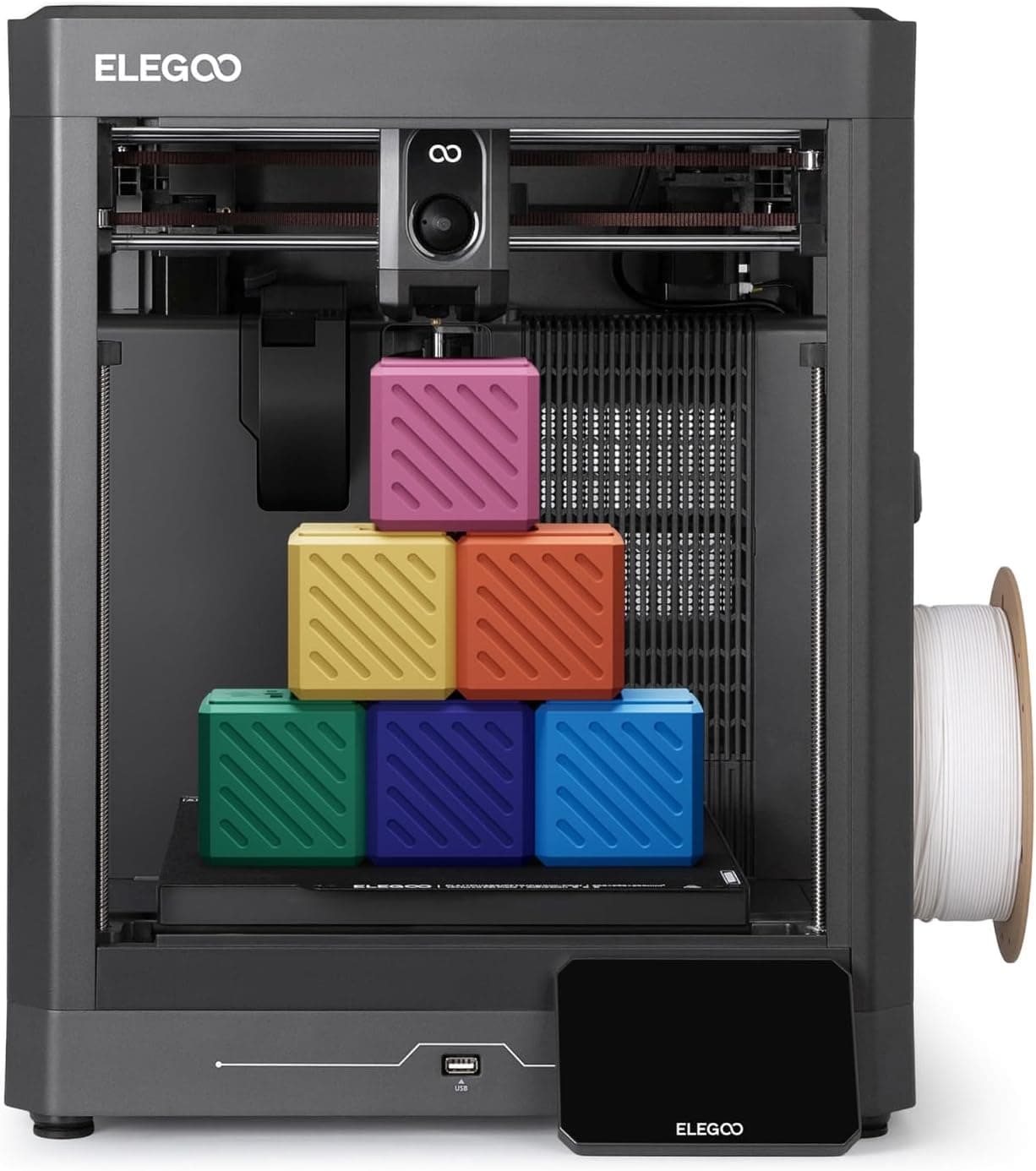
ELEGOO Neptune 4 Max with 500mm/s speed, auto leveling and a 420x420x480mm build for large, fast FDM printing.
Price range: See on Amazon
What we liked
- + 420x420x480mm volume with Klipper-class speed suits big prototypes
- + 500mm/s rated speed makes large prints far less of a multi-day job
- + Auto leveling keeps a huge bed usable without constant tweaking
Trade-offs
- - Large bed slinger shakes a lot, so it needs a solid, heavy surface
- - Tuning speed and quality settings takes effort on such a big machine
Who this printer fits
The Neptune 4 Max is aimed at hobbyists and small workshops who need to print large single parts, such as cosplay pieces, drone frames, or oversized prototypes, without stepping up to an enclosed CoreXY machine. ELEGOO's own product page and retailer listings describe a 420 x 420 x 480mm build volume with pre-installed Klipper firmware for higher speed than typical Marlin-based printers of similar price. That makes it a strong pick for anyone whose designs regularly exceed a standard 220 or 250mm bed. It is less suited to engineering filaments like ABS or nylon that benefit from a closed, temperature-controlled chamber, since this is an open-frame design exposed to room drafts.
Build volume, speed and leveling
ELEGOO's listing and Micro Center's product page both confirm a 420 x 420 x 480mm build volume, and ELEGOO states the printer can reach up to 500mm/s with Klipper firmware, though the practical default speed is closer to 250mm/s with up to 8000mm/s squared acceleration. To keep such a large bed flat and usable, the Neptune 4 Max performs automated bed calibration described in ELEGOO's materials as covering up to 121 points across the plate, well beyond the handful of points typical on smaller printers. The hotend is rated up to 300 degrees Celsius, which ELEGOO says supports PLA, TPU, PETG, ABS, ASA and nylon, and the mainboard uses a quad-core ARM processor with 8GB of onboard storage.
Stability on a large bed-style frame
Because the Neptune 4 Max moves a large bed on the Y axis rather than using a fully fixed CoreXY gantry, the sheer size of the plate means more mass is in motion during fast prints, and owner discussions and reviews commonly recommend placing the machine on a heavy, stable table or adding foam feet to cut down vibration. This is a normal tradeoff for large-format bed-moving printers rather than a defect specific to this model, but it does mean the printer benefits more than a small desktop machine from a solid surface and careful belt tensioning if speeds are pushed toward the upper end of its rated range.
How it compares with rival large-format printers
Against the Anycubic Kobra 3 Max Combo, which shares a similar 420 x 420mm footprint and a higher 600mm/s rating, the Neptune 4 Max is the simpler single-color machine, without the multi-color hardware or the extra desk space that system needs. Compared with the standard Anycubic Kobra 3 Max and Kobra Max models, the Neptune 4 Max's auto leveling coverage and Klipper firmware put it in a similar performance tier at a comparable size. Buyers choosing between these large-format options are mostly trading off ELEGOO's simpler single-material setup against Anycubic's higher top speed and optional multi-color add-on.
Bottom line
The Neptune 4 Max delivers genuinely useful large-format printing with auto leveling that keeps a big bed practical rather than a chore to maintain, and its Klipper firmware gives it real speed headroom over older Marlin printers of similar size. The open frame means it is not the right choice for anyone printing warp-prone engineering filaments regularly, and the large moving bed rewards a stable, heavy table more than a small desktop machine would. For makers who mainly print PLA, PETG or TPU parts too big for a standard bed, it is a well specified option at its price point.
Frequently asked questions
What is the build volume of the Neptune 4 Max?
ELEGOO and retailer listings state 420 x 420 x 480mm, a large single-color FDM volume.
How fast can the Neptune 4 Max print?
ELEGOO rates it up to 500mm/s with Klipper firmware, with a more typical default speed around 250mm/s.
Does it need manual bed leveling?
No, ELEGOO describes automated calibration covering up to 121 points across the plate to keep the large bed level.
What materials can it print?
ELEGOO lists PLA, TPU, PETG, ABS, ASA and nylon, backed by a hotend rated up to 300 degrees Celsius.
Prices change often, so check the current price and availability on Amazon.
Check price on AmazonFilament Print Lab may earn a commission from the link above.