Polymaker ABS Filament 1.75mm Grey, PolyLite ABS 1kg, +/- 0.03mm Review (2026)
Updated September 20, 2026 · Research-based review
Our verdict
A grey 1.75mm ABS spool from Polymaker's PolyLite line, formulated to be lower odor and lower warp than typical ABS while keeping the heat resistance the material is known for. The strength is easier printing within the ABS category. The trade-off is that it still needs an enclosure and higher bed temperatures than PLA or PETG.
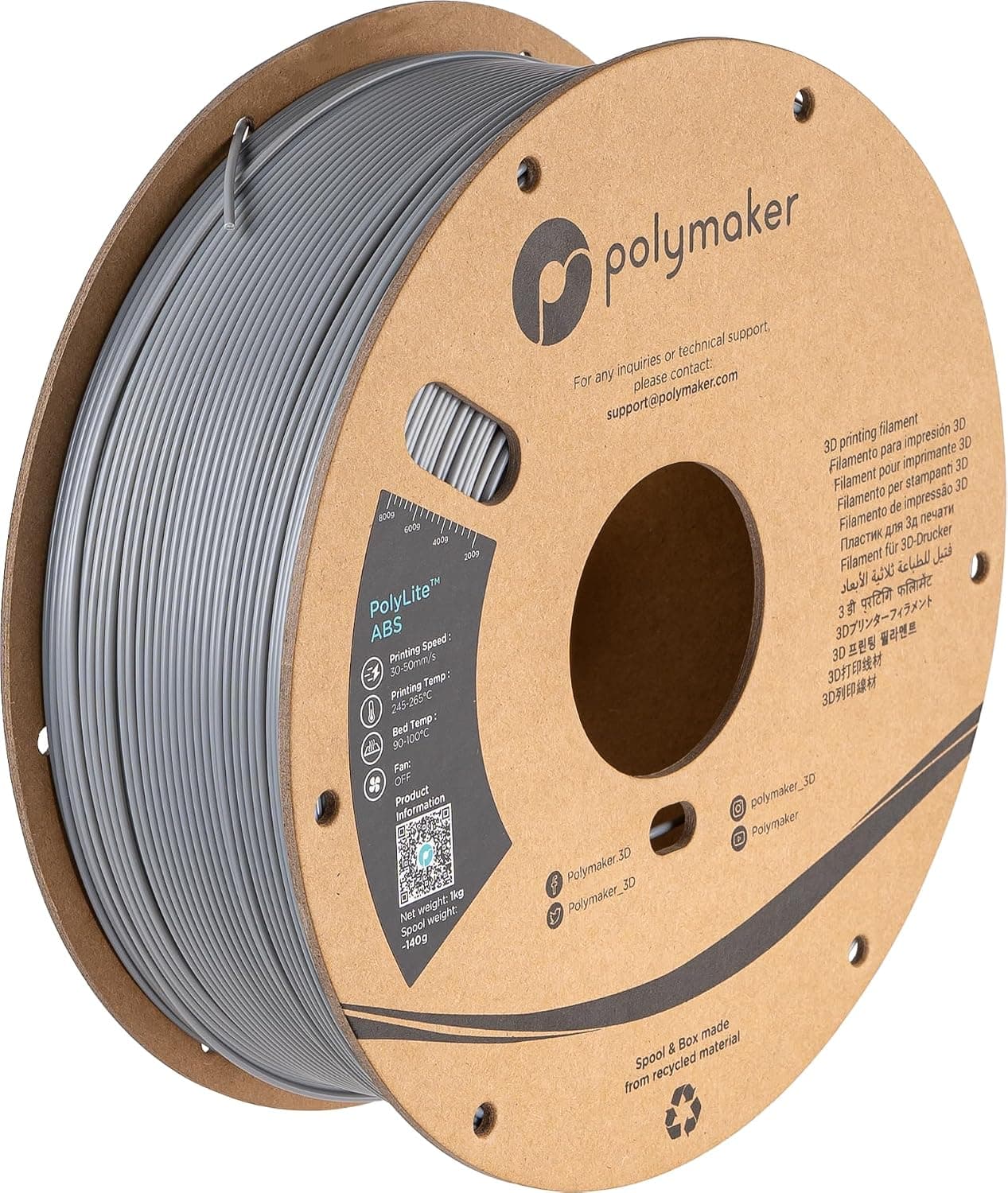
Polymaker PolyLite ABS in grey, a 1.75mm 1kg spool with a standard tolerance for clean engineering prints.
Price range: See on Amazon
What we liked
- + PolyLite ABS is known for easy printing within the ABS category
- + Grey is ideal for prototypes where details and shadows need to show
- + +/- 0.03mm tolerance supports consistent flow on long parts
Trade-offs
- - Costs more than budget ABS brands for a similar spool size
- - Still needs an enclosure, since ABS shrinks as it cools
What This Filament Is
PolyLite ABS is Polymaker's standard ABS line, made from what the company describes as a specialty bulk-polymerized resin intended to lower volatile emissions and reduce the sharp smell often associated with printing ABS. ABS as a material is prized for its heat resistance and durability compared to PLA, making it a common choice for automotive-adjacent parts, enclosures that sit near heat sources, or tools that need to survive rough handling. This grey spool in 1.75mm diameter comes in a 1kg size, and grey is a practical choice for prototypes and functional parts where fine surface detail and shadow definition need to remain visible without a bright or distracting color.
Recommended Print Settings
Polymaker's published guidance for PolyLite ABS calls for a nozzle temperature around 245 to 265 degrees Celsius and a bed temperature around 90 to 100 degrees Celsius, both meaningfully higher than typical PLA settings and in line with what ABS generally requires to bond layers properly and resist warping off the bed. Slower print speeds than PLA are typical for ABS generally, and running the part cooling fan off or very low is standard practice, since heavy cooling on ABS tends to increase warping and layer splitting rather than improving surface finish the way it usually does with PLA prints.
Diameter Tolerance
Manufacturer and retailer-published specifications for PolyLite ABS's diameter tolerance are not fully consistent across sources: Polymaker's own listing pages cite a 1.75mm filament with a stated plus or minus 0.05mm tolerance, while some retailer summaries reference a tighter plus or minus 0.03mm figure for the same product line. Either figure is a reasonably standard tolerance for ABS filament and should print consistently on most FDM printers with a properly calibrated extruder and a well-tuned flow rate, but buyers who need the tightest possible tolerance for precision mechanical parts should treat the published number as approximate rather than a guaranteed hard limit.
Why an Enclosure Still Matters
Despite being marketed as low-warp compared to generic ABS, PolyLite ABS is still ABS at its core, meaning it shrinks noticeably as it cools from its high printing temperature, and uneven cooling across a large or tall part remains the main cause of warping, cracking or corners lifting off the bed. An enclosure that keeps the chamber warm and free of drafts continues to make a real difference in success rate, particularly for taller prints or parts with a large flat base. Printers without any enclosure can still work for smaller, simpler ABS parts, but consistent results on larger prints generally depend on controlling ambient temperature around the model.
Who Should Buy It
This spool suits anyone who wants ABS's heat resistance and toughness for functional parts, automotive or outdoor-adjacent applications, or prototypes that need to survive some rough use, and who already has or is willing to build a simple enclosure. Grey is a solid neutral choice for engineering prototypes where visual detail needs to read clearly under normal lighting. Buyers newer to 3D printing who have not yet worked with ABS should expect a steeper learning curve than PLA, including higher temperatures, a stronger smell during printing, and more sensitivity to drafts and cooling than PLA or PETG typically require.
Frequently asked questions
Do I need an enclosure to print this ABS filament?
It is strongly recommended. PolyLite ABS is formulated to warp less than generic ABS, but it still shrinks as it cools, and an enclosure meaningfully improves results on larger or taller parts.
What nozzle and bed temperature does PolyLite ABS need?
Polymaker's guidance calls for a nozzle temperature around 245 to 265 degrees Celsius and a bed temperature around 90 to 100 degrees Celsius.
What is the diameter tolerance of this filament?
Published figures vary by source, with Polymaker's own listings citing plus or minus 0.05mm and some retailer summaries citing plus or minus 0.03mm; either is a standard tolerance for ABS.
Why choose grey over other colors for prototypes?
Grey is a neutral tone that lets surface detail, edges and shadows on a printed part remain visible without a bright or distracting color drawing attention away from the geometry.
Prices change often, so check the current price and availability on Amazon.
Check price on AmazonFilament Print Lab may earn a commission from the link above.