eVacuum 3D Printer Filament Storage Kit, 10 Bags, 15 Desiccants, 15 Humidity Cards, Hand Pump Review (2026)
Updated September 21, 2026 · Research-based review
Our verdict
A practical option for anyone storing several spools of moisture-sensitive filament like nylon or PETG long term. The main strength is a complete kit with enough desiccant and humidity cards for repeated use; the main trade-off is that the desiccant needs periodic recharging and sealed bags take more shelf space than stacked spools.
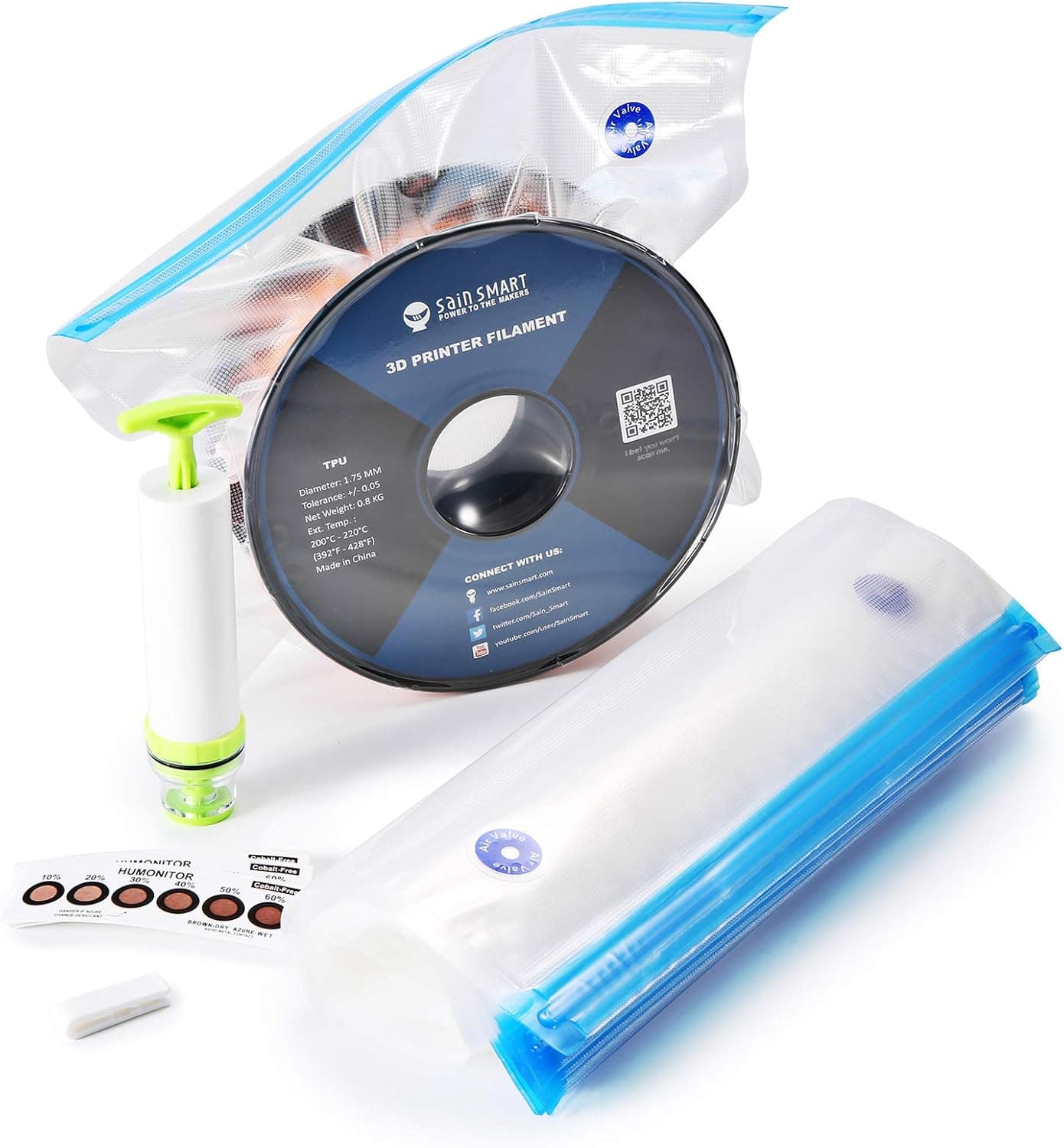
eVacuum filament storage kit with 10 bags, 15 desiccants, 15 humidity cards and a hand pump for dry filament.
Price range: See on Amazon
What we liked
- + 15 humidity cards show at a glance whether a spool stayed dry
- + 15 desiccants cover all bags plus spares for later swaps
- + Complete kit is ready to use without extra purchases
Trade-offs
- - Desiccant packs need replacing or recharging over time
- - Sealed bags take shelf space compared with stacked spools
What is in the kit
The eVacuum Filament Storage Kit includes 10 vacuum compression bags, 15 desiccant packs, 15 humidity indicator cards and one hand pump, giving enough desiccant and indicator cards to cover every bag with a few spares left for later swaps. Each bag uses a heavy-duty valve with a double seal zipper, letting the hand pump draw air out to compress the bag tightly around a spool and reduce the amount of moist air trapped inside. Because the kit ships complete, it is ready to use out of the box without needing to buy bags, desiccant or a pump separately.
Monitoring humidity without opening bags
The included humidity indicator cards are the main convenience feature of this kit: placed inside a sealed bag, they let someone check at a glance whether a spool has stayed dry without breaking the vacuum seal to test the filament directly. The cards are described as cobalt-free and reusable, changing color as humidity rises and able to be dried out again in an oven or with a hair dryer rather than being thrown away after one use. That reusability helps offset the ongoing cost of maintaining several sealed spools over time.
Desiccant maintenance
Like any silica-based desiccant, the packs included in this kit lose their moisture-absorbing capacity over time as they take on humidity from the air inside each bag, so they eventually need replacing or recharging to keep filament properly dry. Many silica desiccants can be recharged by baking them in a low oven, which extends their useful life, but this does mean ongoing attention rather than a one-time setup. Fifteen desiccant packs for ten bags gives a small buffer for spares or larger spools that may want more than one pack per bag. Keeping a rough schedule for checking the humidity cards, rather than assuming a bag stays dry indefinitely once sealed, is the main habit needed to get consistent value from a kit like this over many months of storage.
Fit for different filament types
Moisture-sensitive filaments such as nylon, TPU, PVA and PETG benefit the most from vacuum sealed storage, since absorbed moisture in these materials can cause stringing, popping sounds during printing, or a rough surface finish. PLA is more moisture tolerant but can still benefit from sealed storage in humid climates or for long-term storage between prints. Vacuum bags like these are a lower-cost alternative to a dedicated dry box with active heating, at the cost of needing to manually pump air out and swap desiccant rather than plugging in a box that manages humidity automatically.
Storage space and handling
Because each spool goes into its own sealed bag, this kit takes up more shelf or bin space than simply stacking bare spools, and bags need to be laid flat or stood upright depending on available space rather than nested together like open spools can be. The trade-off for that extra space is meaningfully better moisture protection than open storage, particularly for anyone in a humid climate or storing filament for weeks between prints. For someone with only one or two spools in regular rotation, the extra handling may not be worth it, but for a rack of several spools it is a reasonable way to keep them all print-ready. Labeling each bag with the filament type and the date it was sealed also helps track which spools are due for a humidity check first.
Frequently asked questions
How many bags, desiccants and humidity cards come in this kit?
It includes 10 vacuum bags, 15 desiccant packs, 15 humidity indicator cards, and one hand pump.
Can the humidity indicator cards be reused?
Yes, they are described as reusable after drying them out in an oven or with a hair dryer, rather than needing replacement after one use.
Does the desiccant need to be replaced over time?
Yes, silica desiccant loses absorbing capacity as it takes on moisture, so it eventually needs recharging or replacing to keep filament dry.
Which filaments benefit most from this kind of storage?
Moisture-sensitive materials like nylon, TPU, PVA and PETG see the biggest benefit, though PLA can also benefit in humid climates.
Prices change often, so check the current price and availability on Amazon.
Check price on AmazonFilament Print Lab may earn a commission from the link above.