Deburring Tool Set NG1000 with 11 HSS Swivel Blades 360 Rotary Head for 3D Printing Review (2026)
Updated September 14, 2026 · Research-based review
Our verdict
A well stocked deburring set for anyone who prints often and wants clean edges without sanding every part by hand. Eleven swappable HSS blades and a 360 degree swivel head handle elephant foot, brim residue and curved edges, though the sharp blades demand careful technique and light prints may not need this much tool.
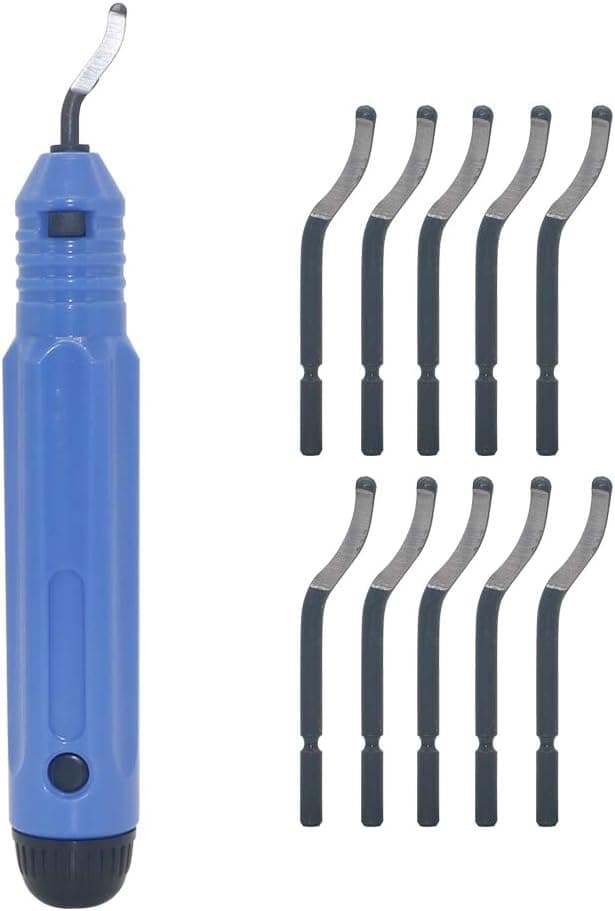
Deburring tool set NG1000 with 11 HSS swivel blades and a 360 rotary head for trimming 3D print edges.
Price range: See on Amazon
What we liked
- + 11 HSS blades give plenty of replacements for heavy use
- + 360 rotary head follows curved edges and holes smoothly
- + Great for cleaning elephant foot and brim edges on FDM parts
Trade-offs
- - Blades are sharp and can slip without careful technique
- - Heavier deburring set is overkill for occasional small prints
Who benefits from a full deburring set like this
This kit targets people who print regularly enough that cleaning up edges has become a repeated chore: functional FDM parts with elephant foot on the first layer, brim tabs that need trimming flush, or holes and bosses that print slightly undersized and need a light pass. A single swivel blade tool is fine for occasional touch ups, but eleven high speed steel blades mean a busy maker, small print farm, or workshop shared by several people will not run out of sharp edges for a long time. It is less necessary for someone who prints a handful of decorative models a year, where a cheap single blade deburring pen or a craft knife covers the same ground with less unused hardware sitting in a drawer.
What the NG1000 set actually includes
The set pairs a handle with a 360 degree rotary head and eleven high speed steel swivel blades, so the cutting edge follows curved or angled surfaces instead of catching on them like a fixed blade would. High speed steel holds an edge through repeated use on plastic, and the swivel action is meant to reach corners, holes and intersecting edges without repositioning the whole tool. The maker markets it across materials including plastic, resin, aluminum, copper, brass and PVC pipe, not just FDM prints, which explains why the kit leans toward more blades than a 3D printing specific tool would include. There is no case or blade organizer described in the listing, so storage is left to the owner.
Using it on prints day to day
On FDM parts the main jobs are knocking down elephant foot along the base of a print, trimming brim or skirt remnants flush with the surface, and cleaning up stringing or overhang blobs before assembly. The swivel head is meant to glide along a curved edge rather than being dragged straight, so light, repeated passes work better than one heavy scrape. Because the blades are genuinely sharp high speed steel, gloves or a firm grip and a stable work surface reduce the chance of a slip, especially on small or oddly shaped parts. With eleven blades on hand there is little reason to keep using a dulled one, which keeps cut quality consistent instead of tearing at softer filaments like PETG or TPU.
How it compares with other deburring kits
Against the Saiper NB1100 kit with ten BS1010 blades, this NG1000 set includes one more blade and edges it out on the site's own ranking, though both use the same swivel head concept and target the same jobs. Cheaper NB1100 clones from other brands ship the same blade count for less, so the gap between this and the budget options comes down to fit and finish rather than a fundamentally different tool. Buyers who only occasionally deburr a print and do not want an 11 blade kit sitting mostly unused may prefer one of the lighter Saiper or generic NB1100 sets instead, which cost less and still cover normal FDM cleanup.
Verdict on this deburring tool set
This is a sensible buy for anyone printing enough functional or mechanical parts that edge cleanup happens weekly, since eleven blades and a swivel head outlast a single cheap blade by a wide margin. It is overkill for someone printing occasional display models, where a smaller kit or a single deburring pen does the same job for less money and less clutter. Handle the blades with respect, since high speed steel keeps its edge specifically because it stays sharp, and a careless pass across a small part can nick a finger as easily as the print.
Frequently asked questions
What is a swivel deburring blade good for on 3D prints?
It follows curved or angled edges without catching, which makes it useful for cleaning elephant foot along the base of a print and trimming brim or skirt remnants flush with the surface.
How many blades come with this set?
Eleven high speed steel swivel blades are included with the handle, enough to replace a dulled or damaged blade many times over before running out.
Can this tool be used on materials other than plastic?
Yes, the same rotary swivel design is sold for metal, resin, aluminum, copper, brass and PVC pipe work, not just FDM printed parts.
Is it safe to use on small or thin printed parts?
The blades are sharp high speed steel, so light passes with a firm grip on a stable surface work better than heavy scraping, and care should be taken to keep fingers clear of the cutting edge.
Prices change often, so check the current price and availability on Amazon.
Check price on AmazonFilament Print Lab may earn a commission from the link above.