Magigoo MO2016 All-in-One 3D Printer Adhesive Glue ABS PLA PETG HIPS TPU 50mL Review (2026)
Updated September 21, 2026 · Research-based review
Our verdict
A dependable all-purpose bed adhesive for anyone printing ABS, PLA, PETG, HIPS or TPU who wants more reliable first layers on glass or PEI without switching build surfaces. The 50mL bottle lasts through plenty of prints with a thin coat, though it adds a small extra maintenance step compared with a bare textured surface.
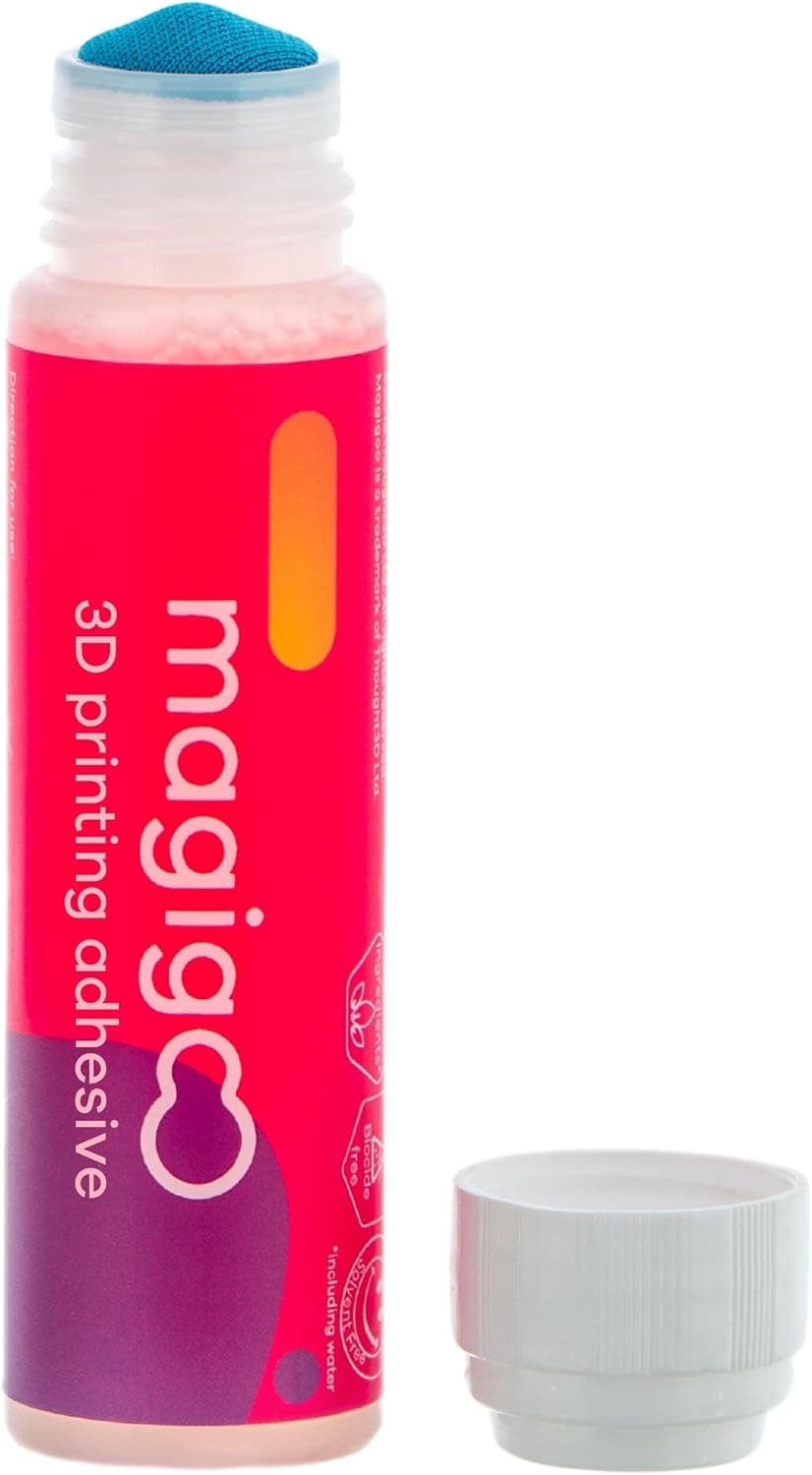
Magigoo MO2016 all-in-one 3D printer adhesive in a 50mL applicator for ABS, PLA, PETG, HIPS and TPU.
Price range: See on Amazon
What we liked
- + All-in-one formula covers the most common hobby filaments
- + Grips when hot and releases as the bed cools down
- + 50mL applicator lasts many prints with a thin coat
Trade-offs
- - Needs to be reapplied after cleaning the bed with water
- - Adds a step compared with printing on bare textured PEI
One formula for the common filaments
This adhesive is designed as a single all-purpose formula that covers ABS, PLA, PETG and is also compatible with HIPS and TPU flexible filament, which covers the large majority of what hobbyist and small business printers run day to day. Rather than needing a different glue stick or hairspray recipe for each material, one bottle handles the switch between filament types without changing your bed prep routine, which simplifies things if you print a mix of materials across different jobs. That single-formula approach also means less clutter on the workbench, since you are not juggling separate adhesives, glue sticks or spray cans for each filament type you happen to be printing that day.
How it grips and releases
The adhesive is applied as a thin coat before printing starts, and it works on a temperature-dependent principle: it grips firmly while the bed is hot during printing, then releases as the bed cools down afterward, which lets finished parts come free with light pressure rather than needing to be pried or scraped off a still-warm bed. This behavior is the main reason people reach for a bed adhesive over just printing on bare glass or PEI, since the difference in grip between an unheated cooled bed and an actively heated one gives you both strong first-layer adhesion and easy part removal from the same setup.
Bottle size and how long it lasts
The adhesive comes in a 50mL bottle, and because only a thin coat is needed per application rather than covering the bed heavily, one bottle stretches across many print jobs before running low. Reapplication is typically needed after the bed has been wiped down with water, since cleaning removes the adhesive layer along with any print residue, so expect to reapply periodically as part of your regular bed maintenance routine rather than treating one application as permanent. For most single-printer hobbyists, one bottle comfortably lasts several months of regular use before it needs replacing, which keeps the ongoing cost of using it fairly low.
Works across common build surfaces
This formula is described as compatible with glass, PEI, Buildtak and Kapton build surfaces, which covers most of what ships stock on desktop 3D printers or gets swapped in as an upgrade. That flexibility matters if you have changed build surfaces over time or run different printers with different stock plates, since you are not locked into a specific surface type to get consistent results from the adhesive. It is odorless and non-flammable, which makes it reasonable to keep and use around a home workspace without special ventilation. That broad surface compatibility also makes it a practical default to keep on a shared or classroom printer where the build surface might change between users.
The trade-off versus a bare textured surface
The most direct alternative to using a bed adhesive is printing on a bare textured PEI sheet, which grips well without any additional product and needs no reapplication step. Choosing to use an adhesive like this instead adds a small extra step to your printing routine, applying and occasionally reapplying the coat, in exchange for more consistent adhesion on smooth glass or PEI surfaces that do not grip as reliably on their own. For anyone who has struggled with warping or lifted corners on a smooth bed surface, that extra step is generally worth the trade for more reliable prints. It is a small enough routine that most users fold it into their normal pre-print checklist without much added friction.
Frequently asked questions
What filaments does this work with?
It covers ABS, PLA and PETG directly, and is also compatible with HIPS and TPU flexible filament.
How big is the bottle and how long does it last?
It comes in a 50mL bottle, and since only a thin coat is needed per application, it typically lasts through many print jobs before needing a refill.
Do I need to reapply it often?
Reapplication is generally needed after wiping the bed down with water, since cleaning removes the adhesive layer along with print residue.
What surfaces can I use this on?
It is described as working on glass, PEI, Buildtak and Kapton build surfaces.
Prices change often, so check the current price and availability on Amazon.
Check price on AmazonFilament Print Lab may earn a commission from the link above.